Everything You Need to Know Before Installing a Home EV Charger
A practical guide to choosing a home EV charger in Saudi Arabia: compatibility, 7, 11 or 22 kW power, electrical readiness, location, and a checklist.

Short answer: Before installing a home EV charger, check six things: that the charger matches your car's connector, the right power rating (7, 11 or 22 kW), the readiness of your electrical panel, the installation spot, who installs it, and which smart features you need. A home charger gives you more convenience and lower running costs than relying on public stations.
1. Check charger compatibility
The charger must support your car's charging connector and the power your manufacturer recommends. Most European and Gulf-market cars in Saudi Arabia use Type 2. If your car uses a different connector, you may need a suitable adapter or cable. Check your car's manual before you buy.
2. Choose the right charger power
Home chargers come in 7, 11 and 22 kW. Higher power charges faster, but your real speed is set by the weakest of the charger, your car's onboard charger and your home's electrical system. As a rule of thumb, time ≈ battery capacity ÷ charger power, so a 90 kWh battery on a 22 kW charger takes about 4.1 hours.

Options we carry include the Voltie 22 kW, the Autel MaxiCharger 12 kW, the SLEV home AC charger up to 22 kW and the Inget Swift Type 2. Browse all home chargers.
3. Evaluate your home's electrical system
Before installation, make sure your electrical panel and wiring can safely carry the extra load for stable operation. The assessment also determines whether you have single or three phase supply and how much cabling is needed.
4. Select the best installation location
Install the charger close to your parking space, with enough room and easy cable access, and protect the equipment from the elements. You can add a Type 2 charging cable of the right length.
5. Professional installation matters
Professional installation ensures electrical safety, reliable performance and compliance with applicable standards.
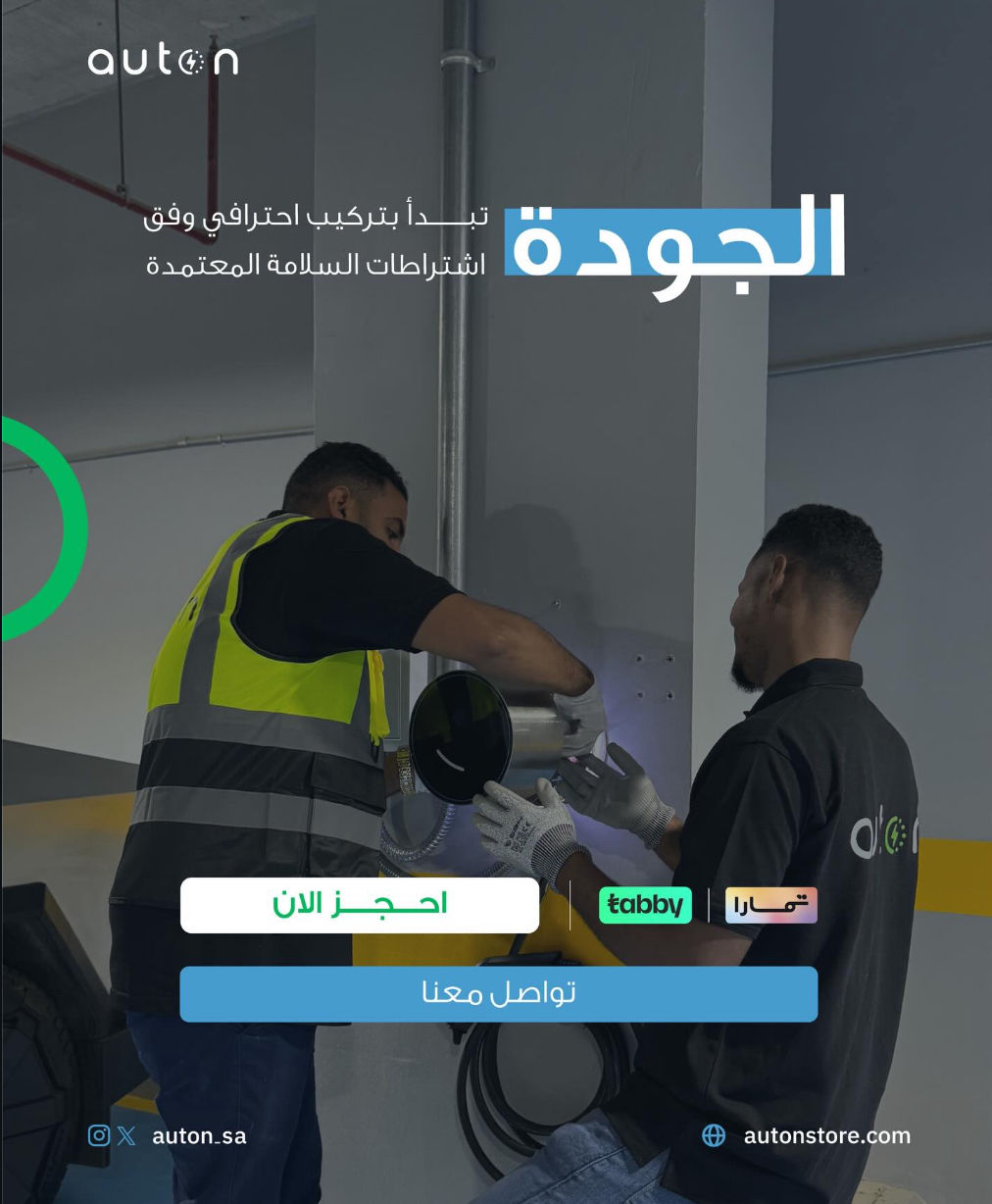
When you buy a 7 or 22 kW smart wall charger from Auton, the price includes the site assessment and installation at no extra charge. If you only want the assessment, you can book a site assessment appointment for SAR 199.
6. Consider smart features
Some chargers offer scheduled charging, energy monitoring and phone app control for a more efficient experience. Voltie, for example, comes with a free app and no monthly subscription.
Pre-installation checklist
- Charger compatibility.
- Correct power rating.
- Electrical system readiness.
- Suitable installation location.
- Professional installation.
- Smart charging features.
Frequently asked questions
What power rating should my home charger have?
It depends on your car and your home's electrical system. Common options are 7, 11 and 22 kW, and your car's onboard charger sets the real maximum.
Do I need an assessment before installation?
Yes. It checks your panel capacity, cable route and installation spot before you buy.
Is the site assessment free?
It is free when you buy a 7 or 22 kW smart wall charger from Auton, and SAR 199 if you book it on its own.
How much does it cost to charge at home?
Read our guide: EV charging cost in Saudi Arabia.
Read next: EV Charging Cost in Saudi Arabia: Complete 2026 Guide | GB/T vs CCS2: Differences and Why EV Adapters Cost More